Minerva Mirabal

July 20, 2008

minerva%20mirabal.jpg

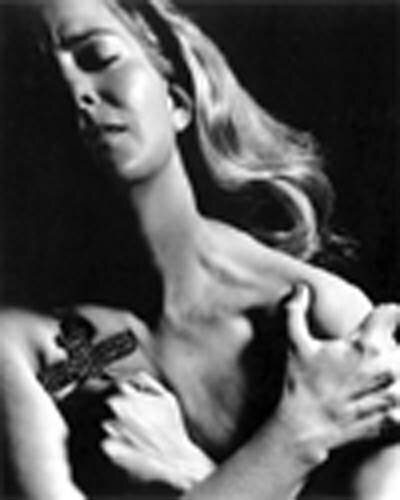
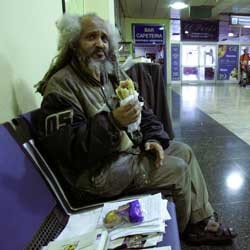
“It’s surreal, isn’t it?” Kristina, one of the organizers of the Chimenea de Villaverde Latin American film festival, told me a few weeks ago. She was referring to the fact that the festival takes place in a multiplex in a shopping centre in the outskirts of Madrid where the image that greets you as you go in is a poster for something called “Kung Fu Panda” which I’ll probably have to see at some stage – five-year old son and all that. But once you’re in Sala 2, you’re watching a different kind of film altogether. Last night it was “Oriundos de la noche”, a Javier Balaguer documentary about the Trujillo regime in Santo Domingo, during the years when Santo Domingo was called “Ciudad Trujillo” – not that the dictator had a big ego or anything. The film full of evocative poetry by Pedro Mir but also tells the awful story of the beautiful Mirabal sisters, three of whom, Patria, Minerva (that’s Minerva in the photo), and Maria Teresa, along with their driver Rufino de la Cruz, were clubbed to death by Trujillo’s henchmen on the outskirts of Puerto Plata on November 25, 1960. (The last Mirabal sister, Dede, is still alive and is interviewed for the film.) There’s nothing new in “Oriundos” if you’ve read Mario Vargas Llosa’s masterpiece “La fiesta del chivo”, but these are the kinds of historical episodes that we need to be reminded of every so often, lest we forget.

Now back to “Kung Fu Panda”…

wxfmbpf

Spain 0, Russia 3

June 26, 2008

depressed.jpg

For weeks, people have been saying that the dream must come to an end, and now it has. The Spanish soccer team, famous for reaching the quarter-final stage of major competitions, made it one step further this time and reached the semi finals of the Euro 2008, but having come this far they were then roundly defeated by a second half display by the Russians, who put no fewer than three goals past them in what some are calling a display of perfect football. The fans are desolate tonight, knowing that this could have been a historic occasion – the first time in 24 years that the Spanish team reached a final. Madrid’s Plaza de Colón, where the celebrations were expected to last until the early hours, is a desolate place. The streets should have been filled with the sounds of car horns, but are strangely quiet, while the city’s barmen are regretting the team’s incapacity to live up the big occasions. The Prince and Princess of Asturias, far from hugging one another through the game, sat there stony-faced throughout, while the players, particularly Iniesta, who played poorly, are heartbroken. The coach, Luis Aragonés, looks and sounds the same as always.

Eh? What? Oh, I’m sorry, I’ll read that again.

apyqj

Big Brother

March 4, 2008

upright-dancing-fighting-bears_5345.jpg

“1. ‘debate’ - 1 a formal discussion, often in front of an audience, in which two or more people put forward opposing views on a particular subject. 2 any general discussion on a subject, not necessarily in one place or at one time. (Chambers Dictionary).” So the two debates, ahead of the March 9 election, that we’ve just had on Spanish television were not really debates at all, because they were not discussions or anything like them. What they were was slanging matches. The particular subject under debate was “whether my party is better than yours” - not “what we need to do to make Spain a better place”. This is smart of the two political parties, because it has been repeatedly demonstrated that people like watching people slagging other people off. This was like Celebrity Big Brother, with two political celebrities slagging each other off. Everyone can react to that, and they watched in their millions. There was also an almost complete lack of political content, of ideas. This may be because the advisers have probably told the politicos that “people don’t like ideas. If you actually express one, then people might not vote for us. Avoid all political content - at best, it will give our opponents another stick to beat us with when we duly fail to deliver, at worst it will lose votes”. So it was all pretty empty. And the media then follow up with empty analysis - who wore the best tie? Who showed less nerves? Who used a certain word more or less? The whole election has been turned into one of style, not of substance, so that people will vote on the colour of a tie. It’s simple, it’s easy to understand, it’s fun, and it’s extremely dangerous - politics and the media working hand in hand to make sure that we, the voters, have the thoughts they want us to think, even though our own personal experience tells us that something’s not quite right - I know the economy’s booming, but wait a moment - I don’t have enough money to get to the end of the month. In fact, most of the media reaction to the debate, and to the whole pre-election process, has been,not about politics, but ABOUT THE MEDIA ITSELF: the media reporting on which candidate is manipulating the media best. The supposedly serious media, and the opinion-shapers behind them, are especially guilty in this respect, casting the entire business as just another entertainment showdown, casting politics (which has the potential, when you think about it, to be a serious business) in its own audience-friendly terms. (The footage used of political meetings etc. by the TV channels apparently has to be authorized for use by the political parties, which is why you never see an empty seat: I’m serious about the “working hand-in-hand” thing.) Celebrity Big Brother, indeed.

Hence the picture. It may look like fighting, but they’re probably all just dancing together.

There’s a long list of things which might change all this, of which here are three:

1. Reconceiving the political system as a game of three, rather than just two players.
2. Accountability for political actions, i.e. the chance that you might lose your job if you tell the public a lie. Transparency.

3. A media that could say what it wanted.

Etcetera, etcetera. Dream on. At least in the States, you get the impression that some real issues are being discussed. It’s just a shame, what mainstream political discourse has come down to in this country, when you think of the marvellous subtlety of thought, vision, concern, willingness to compromise, and energy it took, just thirty years ago, to engineer its transition to democracy.

Photoclima

November 10, 2007

spain460.jpg

Photoclima is one book which the Spanish Tourist Board will be hoping doesn’t make the bestseller lists this Christmas. Published by Greenpeace, it features digitally altered images of what well-known Spanish resorts could look like in the future. The above, circulating the Internet at the moment and taken here from the Guardian, shows La Manga del Mar, in Murcia - top three images before, bottom three after. A neat scare tactic: someone should make the movie.

doet

Spanish Reading Matters/Tricky Gypsies/5 Films

September 22, 2007

A great link to the Guardian’s website today. Something for everyone in there, and it’s good to see that people are sceptical about the claims made for Arturo Pérez-Reverte. Also good to see Barea’s The Forging of a Rebel namechecked: it comes recommended by George Orwell himself. And La Regenta. Someone also mentions Enrique Vila-Matas, who I’m trying at the moment and enjoying, though he’s capable of great pretentiousness. “La Celestina is good fun”, someone writes. Mmm.

Nothing to do with anything, but it’s been bugging me. Today I was waiting in the car at traffic lights on Pintor Rosales, having just taken the kids across to the Casa de Campo on the cable car (it’s great fun the first two or three times, but it wears off after the tenth) when two gypsy women started washing my windscreen and asking for money, as they do. (They always wash the windscreen first.) Anyway, I gave them 50 cents (you shouldn’t, apparently, for reasons too complex to go into here) and as I was handing it over through the window, there was a chink of metal against glass and one of them said “oh, I’ve dropped it” and pointed into the car. Hand on wallet, I opened the car door, looked down, couldn’t see the money and (this feels like a confession of stupidity, but at least it shows I’m nice to gypsies) gave them another 50 cents. But, of course, when I looked later, the money had fallen into the car. It was a trick, quite a clever piece of sleight-of-hand, and well worth the euro I paid to see it. Or at least that’s what I’m telling myself.

Off to the San Sebastián Film Festival tomorrow. Will blog on any exciting film discoveries. Apropos of that, I had to name my five favourite Spanish films of the last couple of years for an article recently. I put:

AzulOscuroCasiNegro (Dir: Daniel Sánchez Arévalo); Ficción (Dir: Cesc Gay); La noche de los girasoles (Dir: Jorge Sánchez-Cabezudo); La soledad (Dir: Jaime Rosales); Volver (Dir: Pedro Almodóvar).

If you haven’t seen any of these, please find the DVD. Have I forgotten any?

qdtj

Little Angels

September 20, 2007

lunnis2.jpg

As I sit here typing this, at 10.30 at night, the sound of children playing comes up through the open window from the park below. Fifteen minutes ago, I was on my way home and the play area just down the road had about eight children in it, the eldest probably around eight years old. There were three adults sitting drinking at a nearby terraza, but surely not enough parents for eight children. Many visiting parents find it surprising that children should be staying up so late. The fact of the matter is, that disciplined timetables are not really a part of Spanish life whatever age you are, and less in the holidays. Wherever you happen to be during August at, say, one am in the morning, whether sitting on a beach in a warm Mediterranean breeze or in the plaza mayor of a medieval mountain village, there is likely to be at least one pram in evidence. In Spain there seems to be an understanding, particularly on holidays and at weekends, that although kids have their rhythms, you do as well – and that if you want to have that last drink on the terraza, then you’re well within your rights to do so. And the benefit of having the little angels yapping round your ankles until one in the morning is that at least you’ll get a good lie-in next day! Madrid is not a particularly child-friendly city at the institutional level – the children’s play parks are quite harsh-looking places, a swing and a slide set thirty square metres of sand – but the child-friendly air somehow makes up for it. If you push a pram around the centre of Madrid for half an hour then someone (often an elderly woman, but other women and elderly men as well) will stop to have a chat about the baby with you. People walking past will turn heads back to have a look inside the pram. The nastiness that seems to be infecting relationships between adults and children in other parts of the world seems not to have taken hold (yet): I remember reminding one Spanish man about the tragic (and internationally remembered) episode in 1993 in Liverpool, when little Jamie Bulger was walked two miles to his death, and being earnestly informed “that would never happen here. Someone would have stopped them”. You have the sense it’s true, and that makes you feel a little safer. Long may it be so. So while you’re in Spain, do let them roam a little, within reason, and let them develop their social skills until past bedtime. And if you live in Spain, you might as well be nice to them because, on current evidence, they’re going to be living with you until they’re thirty-five anyway.

hvty

¿Estás hablando conmigo?

September 12, 2007

taxi.jpg

Cab-catching in Spanish cities can be a minefield for the unwary, with pitfalls ranging from being overcharged to having to listen to extended harangues on the sorry state of the nation whilst trapped in a decrepit 1994 Seat Toledo at a set of unchanging traffic lights in 42ºC of heat because your driver believes that using the air-con places an undue strain on the battery. There isn’t much you can do about the former, but a few simple tips can help make the experience the pleasure it should be. Try to avoid calling for a cab beforehand as they start charging when they receive the call, not when you get in. If taking a cab from the airport, make sure you see your taxista zero the meter, especially if you’re bleary-eyed after a long flight: I was once caught out like this after getting back to Madrid’s Barajas Airport from Buenos Aires at 6 a.m. (And be prepared to pay the airport and baggage surcharges.) If there seem to be a lot of road works in the area you’re trying to catch your cab, be prepared to walk a few yards and put them behind you, because taxi drivers understandably tend to avoid them. If you have to catch a cab late at night, when they are in short supply, be ready to be ruthless. It’s not unusual to wait for ten minutes and then suddenly find someone popping out in front of you to hail the approaching cab you had your eye on, so you should be the one doing the popping. If you have journey time to spare and good eyesight, it’s probably a good idea to quickly gauge whether you like the state of the oncoming cab and the look of the driver before flagging it down: the suspension of some older vehicles brings back childhood memories of the Flintstones. My experience is that women drivers, contrary to what many male taxistas will tell you, are often better – less pent-up rage. Taxi drivers are not expected to take you to your destination by the shortest or quickest route but by the route you tell them to, so a bit of homework with a local A-Z is not a bad idea – try to give the name not only of the destination, but of a major road en route - “por favor, a la Puerta del Sol por (via) la calle Alcalá” – to avoid an unnecessarily round-the-houses journey. And at the end of your trip, tip only if you’ve enjoyed the ride. But if you don’t tip, don’t expect a friendly goodbye.

varmk gauwwu

La Picaresca

September 9, 2007

velazquez_feast-bacchus.jpg

Years of living abroad can give you a kind of split personality. Part of me is now Spanish, I suppose, and I’m most aware of it when I’m back in England and contemplating the idea of leaving the house at 11pm to go out for a few drinks or refusing to leave a tip (tipping isn’t such a big deal here). But part of me is still English. Now here’s a moral dilemma. You arrive back home late one night with a car full of Spanish friends and pull up into the parking space in your underground garage. One of the friends opens the back door a little too enthusiastically, and it bangs into the “4” of the “A4” badge of your famously grumpy neighbours’ Audi, detaching the metal “4” and knocking it to the floor. What would you do? When this happened to me recently, the English part of me won out and I told my friends that I’d leave a note on the Audi and tell the owners the bad news the following morning. My friends howled with laughter. That was not the right solution: the solution was the picaresque one. La picaresca is a particularly Spanish character trait –of which they seem to be simultaneously proud and ashamed - which starts off in 16th century tales about lower-class, anti-heroic protagonists who aim to improve their social status by swindling and trickery. Nowadays, it’s more often used in self-defence against bureaucratic excess. If a friend gets you an early medical appointment or gets some papers authorized, that’s la picaresca. When a doctor friend of your father’s forges a medical note for you, that’s la picaresca. Recently, I took a morning off work to visit the Ministry of Education to be told that they hadn’t accepted my application to have my degree recognized (I wrote about this in a previous issue) because they weren’t sure I’d attached my original degree certificate. Why weren’t they sure? Incredibly, because London University used an embossed seal, not an ink seal, so it wasn’t visible in the photocopy I’d presented. I complained about this to a taxi driver, who told me to get some ink and simply “do” the seal myself. “A ver si cuela”, he said: “let’s see if it works”. Now I’m all for la picaresca if it means fighting silly bureaucracy, but what about the fact that ABC newspaper recently published a survey in which 36.9% of university students claimed that copying in an exam is justified? La picaresca justifies some pretty appalling, sometimes criminal behaviour, too – whether you’re English or not. But anyway - needless to say, there I was at 3 a.m. in the morning, on my hands and knees behind the Audi, a bottle of superglue in my trembling hand. If you see them, please don’t tell them: a ver si cuela.